The short answer
A fair rate depends on how you sell. Counter sales cost far less to process than online orders. Ask for interchange-plus pricing, calculate your effective rate (total fees ÷ card sales), get any reserve terms in writing, and walk away from termination fees and equipment leases.
Why Gun Stores Get Quoted High-Risk Rates
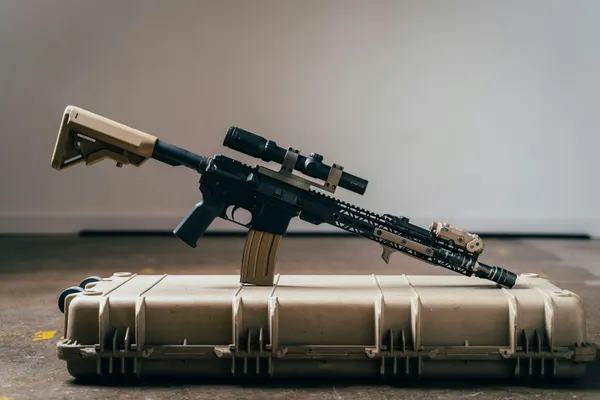
Firearm dealers are commonly quoted 2.95% to 5%, often plus a monthly gateway fee, because many providers price every firearm business as generic "high risk." That label comes mostly from industry classification, not from how much fraud actually happens at your counter. A firearm merchant account underwritten for how you actually sell is the starting point for fair pricing.
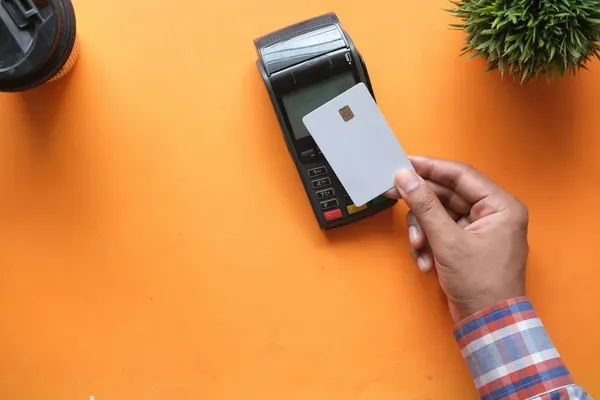
The card networks themselves charge less for a card that's tapped or dipped in person than for a card typed into a website, because in-person sales have far less fraud. If most of your sales happen at the counter, you shouldn't be paying online-store pricing on all of them.
Interchange-Plus vs. Tiered Pricing
Interchange-plus = card network cost + a fixed, visible markup
The network cost (interchange) is the same for every processor. The markup is the only part a processor sets, and with interchange-plus you can see it on every statement.
Tiered pricing bundles costs into "qualified," "mid-qualified" and "non-qualified" buckets. The processor decides which bucket each sale lands in, so the rate you were quoted is rarely the rate you pay. Our interchange-plus pricing guide walks through a real side-by-side cost comparison.
Find Your Gun Store's Effective Rate in 30 Seconds
Your effective rate is the one number that tells you what you're really paying, whatever the pricing model.
Total fees ÷ total card sales = effective rate
Card sales last month
$50,000
Total fees (every line)
$1,780
Effective rate
3.56%
Add up every fee on the statement: percentage rates, per-transaction fees, monthly and gateway fees, PCI fees and anything labeled "other." If your effective rate is well above 3% and most of your sales are in-store, there's a good chance you're overpaying.
Gun Store Rolling Reserves: What They Are and What to Ask
A rolling reserve holds back a percentage of your daily sales, often 5–10%, for a set period, often about six months, to cover potential chargebacks. It's released on a rolling basis, but the cash is tied up in the meantime.
At $100,000 a month in card sales, a 10% six-month reserve ties up about $60,000 of your working capital. For a month-by-month example of how a reserve builds and releases, and what to negotiate, see our guide to how rolling reserves work.
Reserves aren't automatic for every firearm business. Before you sign, ask:
- Will a reserve apply? What percentage, and for how long?
- Is it a rolling reserve or an up-front lump sum?
- What has to happen for it to be reduced or removed, and when will it be reviewed?
Get the answers in writing.
Firearm Merchant Account Fees to Watch For
| Fee | What to ask |
|---|---|
| Early termination fee | Can I leave without a penalty? (START charges none.) |
| Annual or "membership" fee | Is there a once-a-year charge that isn't in the rate? (START charges none.) |
| PCI non-compliance fee | What do I pay if my annual PCI questionnaire is late, and do you help me complete it? |
| Equipment lease | Is my terminal leased? For how long, and can I cancel? Leases often cost far more than buying. |
| Gateway fee and monthly minimums | What's the monthly gateway fee, and is there a minimum processing charge? |
| Address verification (AVS) fee | Am I charged per AVS check on online orders? (START charges none.) |
Switching Processors Without Downtime
If the numbers say you're overpaying, switching is simpler than most dealers expect, as long as you do it in the right order:
- Read your current contract for the term, the cancellation notice period, early termination fees and any equipment lease.
- Get approved with the new processor first. Don't cancel anything until the new account is live.
- Set up and test the new terminal, gateway and website checkout. Run a small live sale and refund.
- Move recurring billing and cards on file (range memberships, layaway plans) with your new provider's help.
- Then cancel the old account in writing, keep the confirmation, and watch for final fees and any held funds.
Were you forced out rather than switching by choice? Read what to do when your account is shut down. Thinking of passing card fees to customers instead? See surcharges and cash discounts.
10 Questions to Ask Before You Sign
Take this list to every processor you talk to. The answers show quickly who understands firearm businesses and who's reselling generic high-risk accounts.
- Is my account underwritten and approved as a firearms business?
- Which bank is my merchant account actually with?
- Do you offer interchange-plus pricing, and what is your markup?
- Will a reserve apply? How much, for how long, and how can it be reduced?
- Are there termination, annual or PCI fees?
- Is equipment purchased or leased?
- How do you handle MCC 5723 for my state? (See MCC 5723 and payment compliance.)
- Which products are approved: firearms, ammunition, accessories, NFA items?
- Does it work with my website and POS?
- Who do I call when something goes wrong, and are they in the U.S.?
Frequently Asked Questions
What rate should a gun store pay?
Firearm dealers are commonly quoted 2.95%–5% as generic high-risk merchants. A fair rate depends on your mix of in-store and online sales. Interchange-plus pricing shows you exactly what you pay.
How do I calculate my effective rate?
Divide the total of every fee on your statement by your total card sales. $1,780 in fees on $50,000 in sales is 3.56%.
What is a rolling reserve?
A percentage of daily sales, often 5–10%, held for a set period (often about six months) to cover potential chargebacks. Ask whether one applies before you sign.
Why do rewards and business cards cost more?
The card networks set higher interchange rates for rewards, corporate and business cards than for basic debit and credit cards. With interchange-plus pricing you pay that actual difference and nothing more. With tiered pricing those cards usually land in an expensive "non-qualified" bucket.
How fast will I get my money?
Card sales are typically deposited to your business bank account within one to two business days. Ask about funding timing, including weekends, when you compare processors.
Does START charge termination or annual fees?
No. There are no termination fees, no annual fees and no address-verification fees.
Paying too much?
Send us your latest statement and we'll show you what you should be paying. START has been in payments for 20+ years and has set up more than 60,000 Authorize.Net accounts.
New to this topic? Start with our Firearm Merchant Accounts overview.